

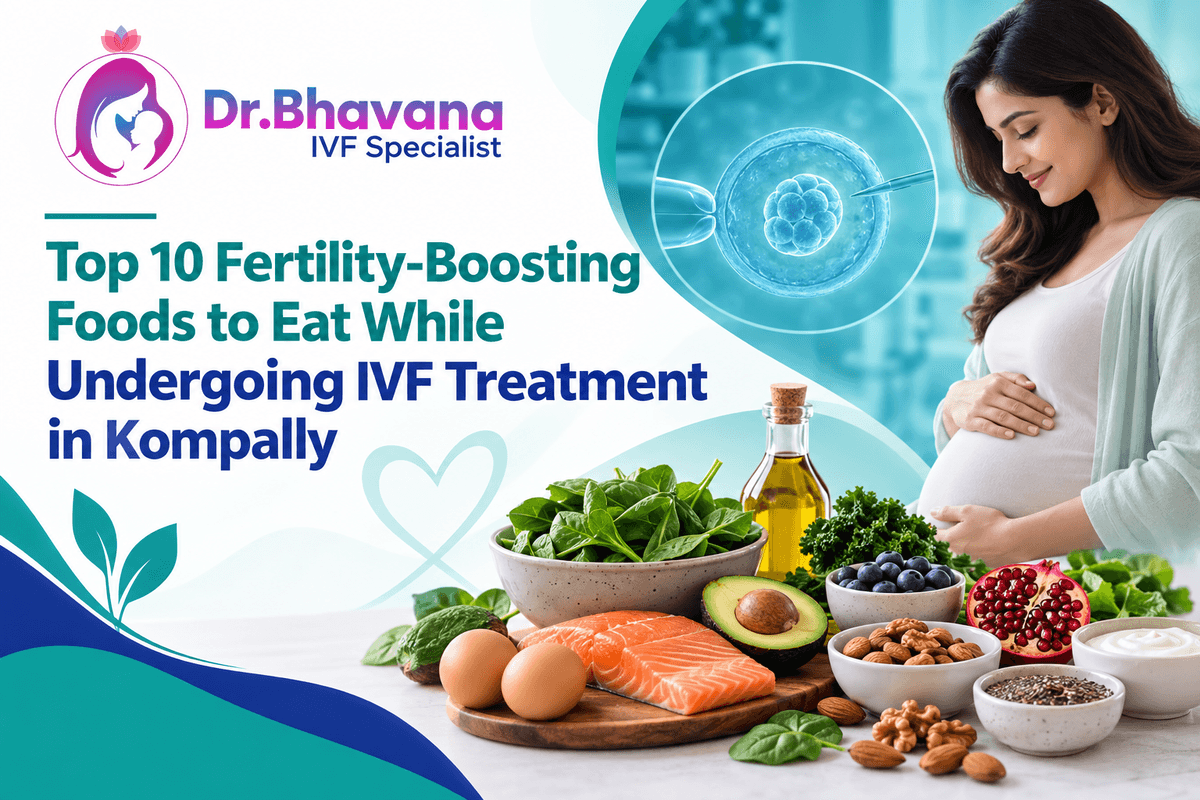
Top 10 Fertility-Boosting Foods to Eat While Undergoing IVF Treatment in Kompally
You're Doing Everything Right — So Why Does Diet Still Matter?
You've made the appointments. You've followed the medication schedule. You're showing up to every monitoring scan. For many women and couples in Kompally and the surrounding areas of North Hyderabad pursuing IVF, the emotional and physical investment is immense.
But here's a question your fertility specialist may have already raised: What are you eating?
It's easy to assume IVF success depends entirely on your doctor, your lab, and your luck. The truth is more empowering — and more actionable. If you're preparing for IVF, your diet can be crucial in optimising your fertility and improving your chances of success. From the quality of your eggs to the likelihood of embryo implantation, nutrition influences egg quality, implantation, and overall IVF outcomes.
Many patients in Kompally are unaware that a few targeted dietary changes — starting as early as 12 weeks before the IVF cycle — can meaningfully shift the odds in their favour. This blog breaks down exactly what to eat, why it works, and how to make it practical in your daily Indian diet.
The Direct Answer: Yes, What You Eat During IVF Genuinely Matters
Science is clear on this. Analysing 13 studies with 3,638 participants, a systematic review found that adherence to specific diets — especially the Mediterranean diet and a novel fertility diet — was associated with a higher likelihood of clinical pregnancy and live birth.
You don't need to import exotic ingredients. The Mediterranean dietary pattern translates beautifully to an Indian vegetarian or non-vegetarian context — it prioritises vegetables, legumes, whole grains, healthy fats, and oily fish, all of which are widely available in Kompally's local markets.
One study found that following a Mediterranean diet while going through IVF increased the probability of pregnancy by 40%. Another study found that for women 35 years or younger, greater adherence to this diet led to significantly higher clinical pregnancy rates (50% vs. 29.1%) and live birth rates (48.4% vs. 26.6%).
The bottom line? While no diet can fix medical issues affecting fertility, certain foods support the reproductive system better than others — they contain antioxidants and nutrients that enhance ovulation or improve sperm quality and quantity.
The Top 10 Fertility-Boosting Foods for Your IVF Journey
At Dr. Bhavana's IVF clinic in Kompally, patients are counselled on personalised nutrition as part of a holistic fertility care approach. Here is the evidence-based list we recommend:
1. 🐟 Fatty Fish (Rohu, Salmon, Sardines)
Fish, nuts, and seeds are rich in omega-3 fatty acids. They may reduce inflammation in the body and may protect egg and sperm quality. Locally available fish like rohu and pomfret are excellent choices for patients in Kompally. A randomised controlled trial found that adherence to a pro-fertility diet with omega-3 supplementation can significantly improve embryological outcomes in infertile women undergoing IVF treatment.
2. 🥦 Dark Leafy Greens (Palak, Methi, Amaranth)
Spinach, fenugreek, and amaranth leaves are rich in folate. Folate, a B vitamin, is essential for DNA synthesis and repair. Research found that higher folate levels were associated with improved sperm quality and embryo development. A prospective study of women undergoing IVF revealed that a doubling in follicular folate levels was associated with a three-fold increase in pregnancy rates.
3. 🥑 Avocado and Healthy Fats
Avocados are rich in monounsaturated fats and Vitamin E. Research indicates that diets rich in omega-3 fats positively impact fertility, including egg quality and embryo implantation. Omega-3s are also well-known for their anti-inflammatory actions and can even promote uterine blood flow.
4. 🌾 Whole Grains (Brown Rice, Oats, Ragi, Jowar)
Swap maida and white rice for brown rice, oats, ragi, or jowar. Boosting IVF success may start with a simple dietary change — adding more whole grains. Whole grains are rich in fibre, B vitamins, iron, zinc, and antioxidants — all essential for hormonal balance and a healthy reproductive system. Emerging research suggests that higher preconception intake of whole grains may improve embryo implantation and overall IVF success rates.
5. 🫘 Lentils and Legumes (Dal, Rajma, Chana)
Dal is already a staple in most Kompally households — and it turns out it's one of the best fertility foods you can eat. Beans and lentils are good sources of spermidine — a polyamine positively associated with fertility — and folate. Researchers associate higher folate levels with higher implantation rates of fertilised eggs and clinical pregnancy with assisted reproduction.
6. 🥚 Eggs (Well-Cooked)
Eggs are a powerhouse of choline, Vitamin D, and protein. Vitamins A and E concentration has been found in the follicular fluid of women undergoing IVF and associated with a better fertilisation rate and a better quality of the embryo. Ensure eggs are always fully cooked during IVF treatment to eliminate the risk of bacterial infection.
7. 🫐 Berries and Antioxidant-Rich Fruits (Amla, Pomegranate, Blueberries)
Amla (Indian gooseberry) is one of the richest natural sources of Vitamin C. Oxidative stress has been implicated in various reproductive challenges. Antioxidants, which neutralise free radicals, are crucial in maintaining cellular health. Research highlighted that antioxidants might improve oocyte quality, thereby enhancing IVF outcomes.
8. 🥜 Walnuts and Seeds (Flaxseeds, Sunflower Seeds)
Walnuts contain Vitamin E, an antioxidant that helps increase sperm count and motility. One study focusing specifically on walnuts and male fertility found that eating just one handful (about 42 grams) of walnuts daily for three months produced healthier sperm. Flaxseeds also add plant-based omega-3s to the daily diet.
9. 🍶 Probiotic Foods (Curd, Homemade Buttermilk)
Curd is your gut's best friend during IVF. There is evidence that the gut microbiome impacts fertility. So eating foods that support the gut can be beneficial. You may want to consider including small amounts of fermented food and probiotic foods. In the Indian context, fresh homemade curd (dahi) and buttermilk (chaas) are ideal daily inclusions.
10. 🍄 Mushrooms and Fortified Foods (for Vitamin D)
Vitamin D regulates gene expression in reproductive tissues, improves oocyte activation, maturation, and IVF outcomes, and enhances fertility by increasing antioxidant levels. Researchers found women with sufficient preconception Vitamin D concentrations were 10% more likely to become pregnant and 15% more likely to have a live birth compared to women with insufficient levels.
What to Avoid During Your IVF Cycle
Knowing what not to eat is just as important. During the whole IVF process, what you avoid is just as important as what you eat, as certain food habits can severely affect the body's hormonal balance. These include raw or undercooked foods, junk or processed foods, caffeine, alcohol, carbonated beverages, and gas-forming foods after egg retrieval.
Trans fats, alcohol, caffeine, and sugar have all been associated with adverse fertility outcomes. Foods like white bread, pasta, and sugary snacks can cause blood sugar to spike and negatively impact fertility — opt for whole grains and complex carbohydrates instead.
The Evidence: Why Nutrition Is a Clinical Priority in IVF
The science supporting nutrition in IVF is robust and growing. A randomised controlled trial found that the intervention group (following a pro-fertility diet with omega-3 supplementation) had significantly higher fertilisation rates (0.81 vs. 0.66) and embryo formation rates (0.79 vs. 0.62), and an increased number of embryos formed.
Analysing data from 11 studies involving over 14,000 participants, researchers found that greater adherence to the Mediterranean diet was linked to improved fertility markers, including higher pregnancy rates, increased live births, and enhanced sperm concentration and count.
From an Indian perspective, for women under 35, the IVF success rate in India is around 52%, largely determined by age, fertility history, and clinic protocols. Outcomes are usually dependent upon maternal age, embryo quality, lifestyle factors, and the proficiency of the treating clinic — meaning nutrition is one of the few controllable levers patients hold in their own hands.
A pro-fertility diet combined with omega-3 supplementation was associated with higher fertilisation and embryo formation rates, as well as superior embryo quality. Given its safety, cost-effectiveness, and favourable patient concordance, this nutritional approach can be considered a valuable adjunctive strategy alongside ART.
Frequently Asked Questions (FAQs)
❓ How early should I start a fertility diet before IVF?
You should ideally begin a fertility-focused diet at least 3 months before your IVF cycle starts. It would be best to cut out alcohol at least three months before IVF treatment to give your body a chance to remove the toxins. The same timeline applies to building up folate, Vitamin D, and omega-3 levels in your body for maximum impact on egg quality.
❓ Can diet actually improve egg quality before IVF retrieval?
Yes — directly. Folates play a key role in oocyte quality and maturation by scavenging free radicals and supporting cell division. Supplementing the diet with high levels of folate and Vitamin B12 in women has been linked to improved IVF outcomes such as significantly increased pregnancy and live birth rates. Foods like palak, methi, and whole dals support this naturally.
❓ Is a vegetarian Indian diet compatible with an IVF fertility diet?
Absolutely. The core principles of a pro-fertility diet map well onto a traditional Indian vegetarian plate. Whole grains are rich in fibre, B vitamins, iron, zinc, and antioxidants — all essential for hormonal balance and a healthy reproductive system. Dals, sabzis, curd, oilseeds, ragi, and amla collectively provide nearly all the key fertility nutrients your body needs during IVF treatment.
❓ What foods should I eat specifically after embryo transfer in Kompally?
After your embryo transfer at your IVF clinic in Kompally, focus on warm, nourishing, easy-to-digest foods. During the two-week wait, maintain a calm, nourishing diet that includes protein, fibre, and healthy fats. Stay hydrated, include fruits and vegetables, and avoid foods that may cause digestive discomfort. Homemade khichdi, dal, steamed vegetables, and warm soups are ideal — avoid raw salads, cold drinks, and processed snacks during this critical window.
❓ Should I take supplements in addition to eating fertility foods during IVF?
Food first — always — but supplements can fill critical gaps. Increased intake of folic acid (800 mg/day) was associated with higher ovarian reserve and also shown to improve ovulatory function and higher live-birth rate after IVF. Antioxidants like Vitamin C, Vitamin E, Selenium, CoQ10, and Zinc may improve fertility outcomes by reducing oxidative damage. Always consult your IVF specialist before starting any supplement regimen, as dosage needs are highly individual.
Visit Us
Visit Dr Bhavana for trusted, compassionate care. We're here for you and your family.
Dr Bhavana
Kompally
Phone: 919703158186
Website: drbhavanaivf.com
Google Maps: https://www.google.com/maps/place/?q=place_id:ChIJw8YTyBObyzsRuGWwiFLcF5s
Email: help@drbhavanaivf.com