Performed by Dr Bhavana
Embryo donation programs connect recipients with embryos donated by couples who have successfully completed fertility treatment and choose to help others. The recipient undergoes preparation to receive the embryo, which is transferred to the uterus. This option may be considered when both partners have fertility challenges or when creating embryos with their own genetic material is not possible.
We believe in honest, upfront disclosure so you can make an informed decision.
A step-by-step look at what happens during this procedure.
The recipient couple undergoes medical evaluation including blood work, ultrasound examination, and assessment of the uterine cavity. Infectious disease screening and sometimes genetic counseling are completed. Psychological counseling helps prepare for the emotional aspects of receiving donated embryos.
Donated embryos are matched with recipients based on medical compatibility and program protocols. Donors typically have completed their own families and choose to donate remaining embryos from their fertility treatment. Legal agreements are established to clarify parental rights.
The recipient begins hormone medications to prepare the uterine lining for implantation. Estrogen builds the endometrial lining, followed by progesterone to support embryo attachment. Regular monitoring with ultrasound and sometimes blood tests ensures the lining develops appropriately.
Donated embryos are typically stored frozen. On the day of transfer or the day before, the embryology team carefully thaws the embryos using controlled warming protocols. The embryos are assessed for survival and quality after thawing.
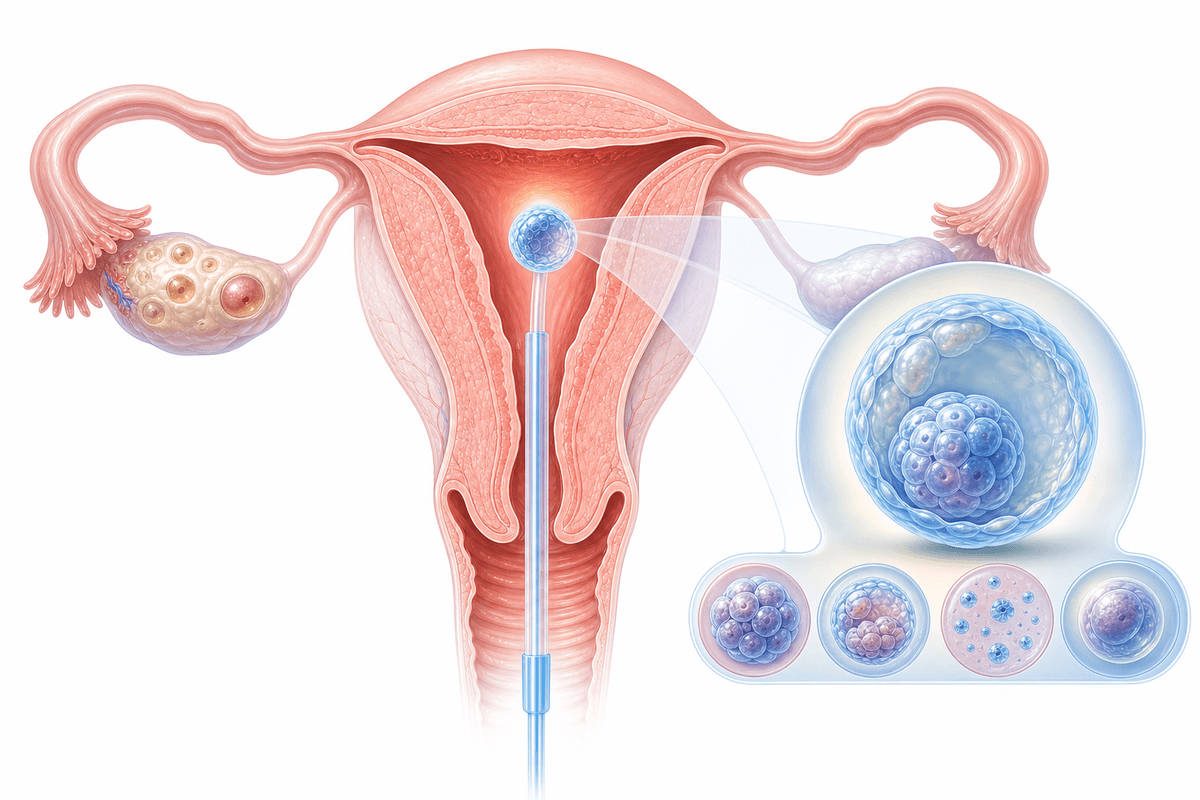
The thawed embryo is loaded into a thin, flexible catheter. Under ultrasound guidance, the catheter is gently passed through the cervix and the embryo is placed into the uterine cavity. The procedure takes about 15-20 minutes and usually requires no anaesthesia. After transfer, progesterone support continues and a pregnancy test is done about two weeks later.
A structured, patient-first approach from first consultation to full recovery.
Dr Bhavana conducts thorough medical evaluation of recipients, including assessment of uterine health, hormone levels, and overall readiness. She ensures both partners understand the medical process and coordinates psychological counseling to address emotional considerations.
Each recipient receives an individualized medication plan to prepare the uterine lining. Dr Bhavana monitors response through ultrasound and adjusts medications as needed to optimize conditions for embryo implantation.
Dr Bhavana performs the embryo transfer under ultrasound guidance to ensure accurate placement. She uses gentle technique to minimize disruption to the uterine environment and provides clear instructions for the post-transfer period.
Dr Bhavana follows recipients through the waiting period, pregnancy testing, and early pregnancy monitoring if successful. She remains available to address concerns and provides guidance throughout the process.
What to expect at each stage of your recovery journey.
After the embryo transfer, recipients typically rest for a short period at the clinic before going home. Light activity is resumed the same day, though some choose to rest for the remainder of the day. Progesterone medications continue as prescribed.
The period between transfer and pregnancy testing requires patience. Recipients continue medications, avoid strenuous activity, and watch for concerning symptoms like heavy bleeding or severe pain. Normal daily activities are generally fine. Individual guidance from the clinical team takes priority.
If the pregnancy test is positive, hormone support continues and early monitoring begins with ultrasound examinations. If negative, the clinical team discusses next steps, which may include another cycle. Emotional support remains important during either outcome.
Embryo donation offers couples a chance to experience pregnancy and childbirth when other options may not be available. It allows recipients to be involved from the earliest stages of development, though the child will not share their genetic material.
Whether an embryo transfer results in pregnancy depends on many factors including embryo quality, uterine receptivity, and individual biology. Some recipients achieve pregnancy with the first transfer while others require multiple attempts, and some may not achieve pregnancy despite multiple cycles.
Recipients must navigate unique emotional aspects of using donated embryos, including disclosure decisions and questions about genetic connection. Counseling helps address these considerations, though emotional responses vary widely among individuals and couples.
While embryo donation bypasses issues with egg or sperm quality, it requires a receptive uterus and ability to carry a pregnancy. It may not be suitable for those with uterine abnormalities, severe medical conditions, or other factors that affect pregnancy carrying capacity.
The right choice depends on your diagnosis, risks and circumstances — discussed with you at your consultation.
When only one partner has fertility challenges, using donor eggs with the male partner's sperm, or donor sperm with the female partner's eggs, allows one genetic connection to the child. This option is considered when embryo donation is not preferred or when one partner can contribute gametes.
Adoption allows individuals or couples to build their family without pregnancy or genetic connection. It may be preferred when medical conditions make pregnancy unsafe, when repeated fertility treatments have been unsuccessful, or when couples choose this path for personal reasons.
When a woman cannot carry a pregnancy due to uterine issues or medical conditions but wishes to use donor embryos, surrogacy may be considered. This combines embryo donation with gestational surrogacy and involves more complex legal and logistical arrangements.
Let's clear up some of the most common myths about embryo donation programs.
Get a personalised assessment from an experienced specialist. Understand your options, ask your questions, and decide with confidence.