Performed by Dr Bhavana
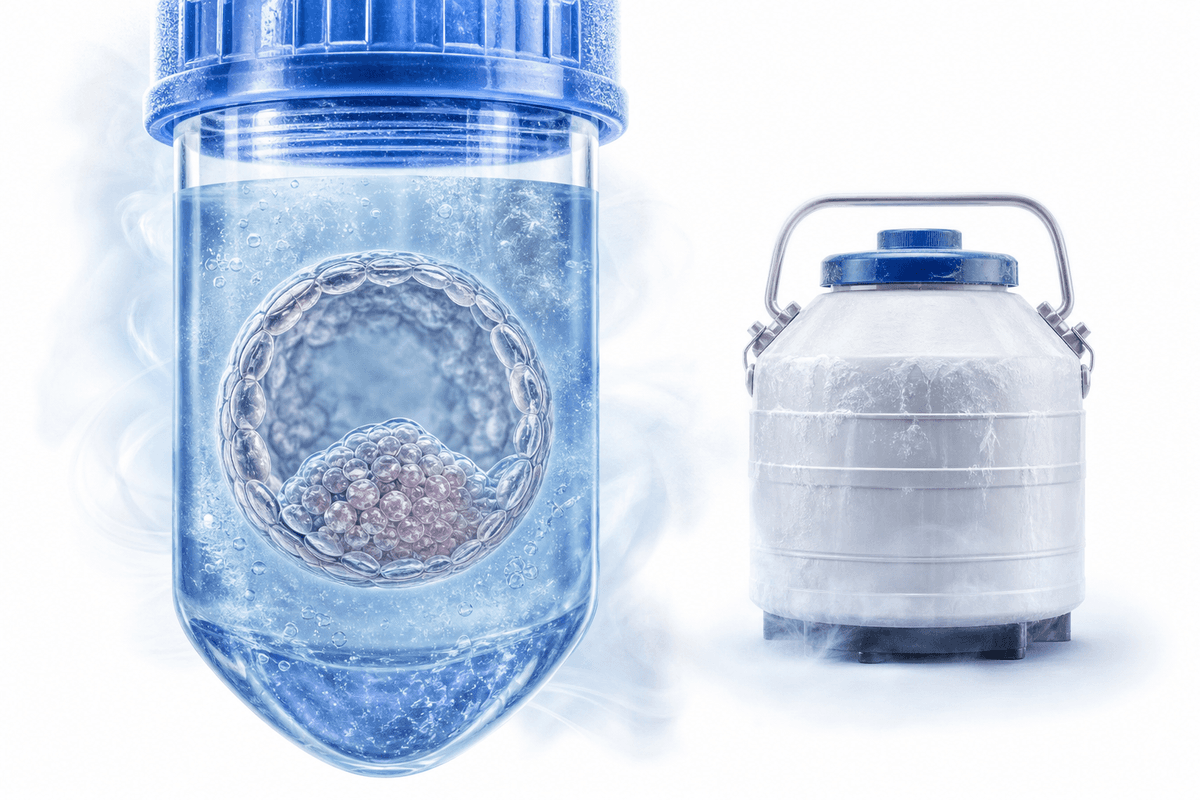
Embryo freezing, also called embryo cryopreservation, is a laboratory procedure that preserves embryos at sub-zero temperatures for future use. It is commonly performed after in vitro fertilisation (IVF) when more embryos develop than are transferred in a single cycle. Dr Bhavana offers embryo freezing in Kompally, Hyderabad, allowing patients to store healthy embryos for later attempts without repeating ovarian stimulation.
We believe in honest, upfront disclosure so you can make an informed decision.
A step-by-step look at what happens during this procedure.
After IVF, embryos that have developed to a suitable stage (usually day 3 or day 5 blastocyst) and meet quality criteria are selected for freezing.
Embryos are placed in a special solution containing cryoprotectants that protect cells from ice crystal damage during freezing.
Most centres now use vitrification, a rapid freezing method that turns water in cells into a glass-like state, preventing ice crystal formation.
Frozen embryos are placed in labelled containers and stored in liquid nitrogen tanks at approximately minus 196 degrees Celsius.
When the patient is ready for transfer, embryos are carefully thawed, assessed for survival, and transferred into the uterus during a frozen embryo transfer cycle.
A structured, patient-first approach from first consultation to full recovery.
Dr Bhavana and the embryology team evaluate embryo quality and development stage to identify which embryos are suitable for cryopreservation.
The laboratory uses vitrification to rapidly freeze embryos, reducing the risk of cellular damage and improving survival rates after thawing.
Embryos are stored in monitored liquid nitrogen tanks with continuous temperature checks and proper labelling to ensure safe long-term preservation.
When ready, Dr Bhavana coordinates the frozen embryo transfer cycle, including endometrial preparation and timing, to optimise conditions for implantation.
What to expect at each stage of your recovery journey.
Embryo freezing itself requires no physical recovery since it is a laboratory process. Patients do not undergo any procedure on the day of freezing.
No active recovery is needed during storage. Patients may continue normal activities and life decisions while embryos remain preserved.
When planning a frozen embryo transfer, patients will follow preparation protocols that may include hormone medications and monitoring. Recovery timelines then relate to the transfer cycle itself.
Embryo freezing allows patients to use embryos in later cycles without repeating ovarian stimulation and egg retrieval. This can reduce treatment burden and cost for subsequent attempts.
While modern vitrification has improved results, not all frozen embryos survive the thawing process. Some embryos may lose viability, and this cannot be predicted with certainty.
For those facing medical treatments or life circumstances that may delay pregnancy, embryo freezing provides a means to preserve reproductive potential at the current time.
Having frozen embryos stored does not assure that a pregnancy will occur. Success depends on embryo quality, uterine receptivity, and other factors assessed during the transfer cycle.
The right choice depends on your diagnosis, risks and circumstances — discussed with you at your consultation.
Transferring embryos in the same IVF cycle without freezing may be preferred when uterine conditions are optimal and there is no medical reason to delay. Choice depends on hormone levels and endometrial readiness.
Freezing unfertilised eggs instead of embryos may be considered by individuals without a partner or who prefer not to create embryos at the time. This option involves egg retrieval and cryopreservation before fertilisation.
Some patients choose to transfer all suitable embryos or fertilise only the number of eggs they plan to transfer immediately, avoiding storage decisions. This approach depends on personal, ethical, and medical considerations.
Let's clear up some of the most common myths about embryo freezing.
Get a personalised assessment from an experienced specialist. Understand your options, ask your questions, and decide with confidence.