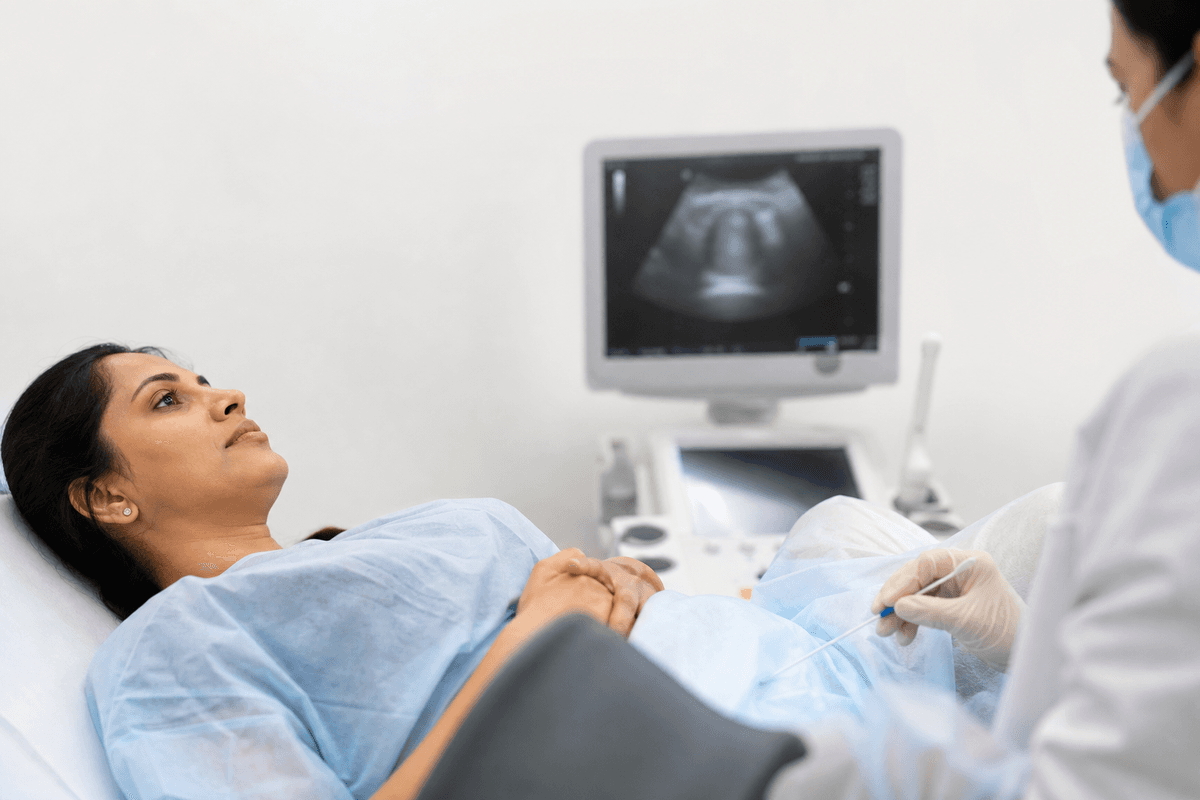
Performed by Dr Bhavana
An endometrial biopsy involves taking a small tissue sample from the uterine lining to examine its health and receptivity. The Endometrial Receptivity Array (ERA) is a specialized test that analyzes the optimal window for embryo implantation. These procedures help identify timing issues or underlying problems that may affect fertility treatment outcomes.
We believe in honest, upfront disclosure so you can make an informed decision.
A step-by-step look at what happens during this procedure.
You lie on an examination table in a position similar to a routine pelvic exam. A speculum is gently inserted to visualize the cervix.
The cervix may be cleaned with an antiseptic solution. In some cases, local anaesthetic may be applied to minimize discomfort.
A thin, flexible catheter is carefully guided through the cervix and into the uterine cavity. This step may cause brief cramping.
Gentle suction or a scraping motion collects a small sample of the endometrial lining. The tissue is removed and preserved for laboratory analysis.
The instruments are removed. You rest briefly before being allowed to leave. The tissue sample is sent to a laboratory for examination.
A structured, patient-first approach from first consultation to full recovery.
Dr Bhavana determines the optimal cycle day for the biopsy based on your menstrual cycle and the specific information needed, ensuring the sample reflects the appropriate endometrial phase.
The procedure is performed with careful attention to minimizing discomfort. Instructions are provided throughout to help you stay as comfortable as possible.
For ERA testing, samples are processed using molecular analysis to identify your personalized implantation window, which guides the timing of embryo transfer in future cycles.
Once laboratory results are available, Dr Bhavana reviews the findings with you and discusses how they inform your fertility treatment plan moving forward.
What to expect at each stage of your recovery journey.
Mild cramping and light spotting are common immediately after the procedure. Rest for a short period before resuming light activities. Individual recovery experiences vary.
Cramping usually subsides within a day or two. Light bleeding may continue for a few days. Avoid strenuous activity, sexual intercourse, and inserting anything into the vagina during this time.
Most women return to regular activities within one to two days. Follow specific post-procedure instructions provided by your clinical team, as individual circumstances differ.
The biopsy can reveal structural or hormonal issues affecting the uterine lining, such as inflammation, polyps, or abnormal cell patterns. It does not guarantee resolution of fertility challenges.
ERA testing may identify a shifted implantation window, allowing embryo transfer to be timed accordingly. However, correcting timing alone may not address all factors affecting implantation success.
Results provide data to guide treatment adjustments, such as hormone supplementation or infection treatment. The procedure itself is diagnostic and does not treat underlying conditions.
A biopsy samples only a small area and may not detect all abnormalities. It does not assess egg quality, sperm factors, or embryo health, which also influence fertility outcomes.
The right choice depends on your diagnosis, risks and circumstances — discussed with you at your consultation.
Transvaginal ultrasound can assess endometrial thickness and pattern non-invasively. It may be considered when only structural information is needed, though it cannot provide tissue-level or molecular detail.
A camera inserted into the uterus allows direct visualization and targeted sampling. This may be chosen when structural abnormalities like polyps or fibroids are suspected, combining diagnosis and potential treatment.
In some cases, clinicians may adjust progesterone support or embryo transfer timing based on clinical patterns rather than testing. This approach depends on individual risk assessment and treatment history.
Let's clear up some of the most common myths about endometrial biopsy / era-related procedures.
Get a personalised assessment from an experienced specialist. Understand your options, ask your questions, and decide with confidence.