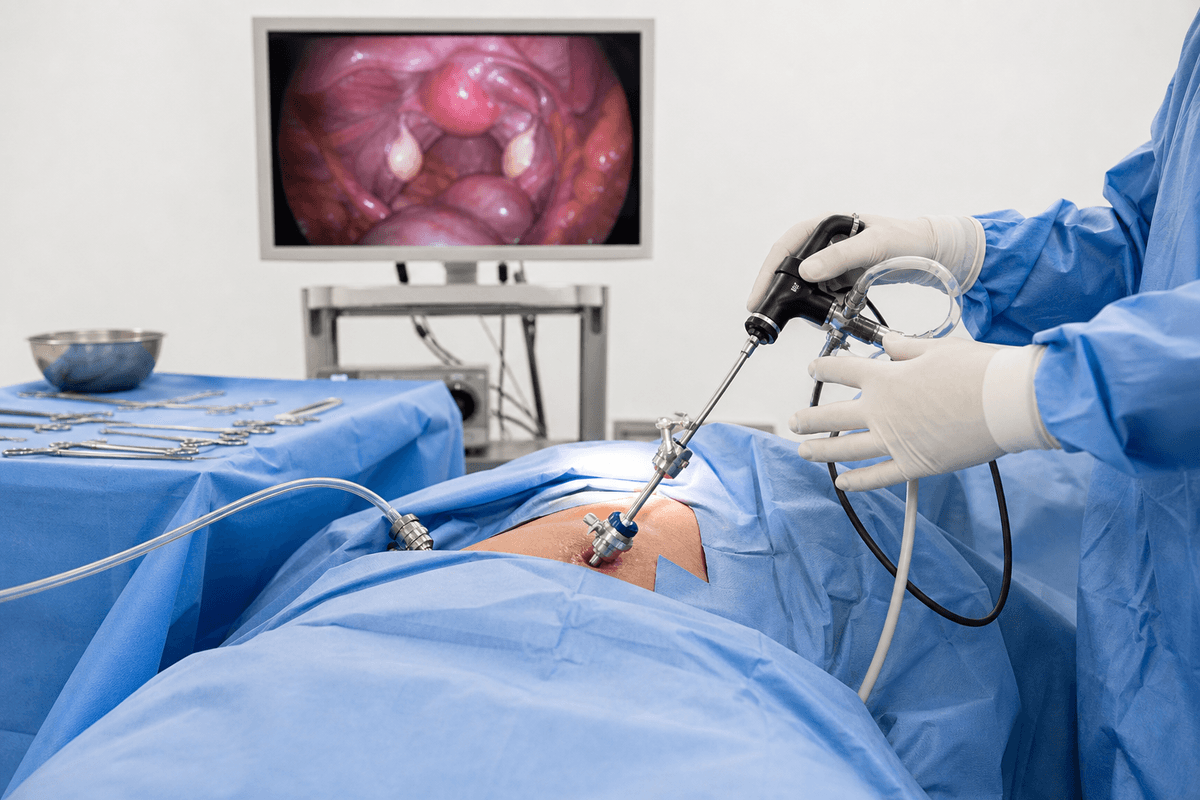
Performed by Dr Bhavana
Laparoscopy in Kompally, Hyderabad is a minimally invasive surgical procedure that allows examination and treatment of pelvic organs through small incisions. This advanced technique is particularly valuable for diagnosing and treating infertility-related conditions such as endometriosis, ovarian cysts, and tubal blockages. Dr Bhavana, an experienced IVF Specialist, performs diagnostic and operative laparoscopy with precision to enhance fertility outcomes for her patients.
We believe in honest, upfront disclosure so you can make an informed decision.
A step-by-step look at what happens during this procedure.
General anaesthesia is administered to ensure you are completely comfortable and pain-free throughout the procedure. An anaesthesiologist monitors your vital signs continuously during the surgery.
A small incision (usually 0.5-1 cm) is made near the umbilicus, and additional tiny incisions may be made in the lower abdomen. These minimal incisions reduce scarring and promote faster healing compared to traditional open surgery.
The abdomen is gently inflated with carbon dioxide gas to create space and improve visualization of the pelvic organs. This allows the surgeon to examine structures clearly without causing damage.
A thin tube with a high-definition camera (laparoscope) is inserted through the umbilical incision. The camera transmits real-time images to a monitor, allowing detailed examination of the uterus, fallopian tubes, ovaries, and surrounding tissues.
The surgeon examines the pelvic organs for abnormalities such as endometriosis, adhesions, cysts, or tubal blockages. If issues are identified, specialized instruments can be inserted through additional ports to perform corrective procedures like removing endometrial implants, draining cysts, or opening blocked tubes.
A structured, patient-first approach from first consultation to full recovery.
Dr Bhavana conducts a thorough evaluation including medical history review, physical examination, and necessary imaging studies to determine if laparoscopy is the most appropriate diagnostic or therapeutic option for your specific fertility concerns.
Using state-of-the-art laparoscopic equipment and high-definition imaging, Dr Bhavana performs meticulous examination of your reproductive organs. Her expertise in fertility-focused laparoscopy ensures accurate diagnosis and effective treatment of conditions affecting conception.
When abnormalities are identified, Dr Bhavana performs precise corrective procedures such as endometriosis excision, adhesiolysis, ovarian cystectomy, or tubal reconstruction to optimize your reproductive potential and improve natural conception or IVF success rates.
Dr Bhavana provides detailed recovery instructions and schedules follow-up appointments to monitor healing and discuss findings. She develops an individualized fertility treatment plan based on laparoscopic findings to maximize your chances of achieving pregnancy.
What to expect at each stage of your recovery journey.
You may experience mild abdominal discomfort, bloating, and shoulder pain from residual gas. Rest is essential, and pain is managed with prescribed medications. Light walking is encouraged to help disperse gas and prevent blood clots.
Most discomfort subsides significantly. You can resume light daily activities and work if your job is not physically demanding. Avoid heavy lifting, strenuous exercise, and sexual intercourse. Incision sites should be kept clean and dry.
Full recovery is typically achieved within 2-4 weeks. You can gradually return to normal activities including exercise. Dr Bhavana will review findings, discuss implications for your fertility, and recommend next steps in your treatment plan during your follow-up visit.
Laparoscopy provides direct visualization and definitive diagnosis of conditions like endometriosis, pelvic adhesions, ovarian cysts, and tubal pathology that may not be detected by ultrasound or other imaging methods, enabling targeted treatment strategies.
Many fertility-impairing conditions can be treated during the same procedure, including removal of endometriotic lesions, lysis of adhesions, drainage of cysts, and restoration of tubal patency, potentially improving natural conception rates immediately.
Treating endometriosis, hydrosalpinx, and other pelvic pathology through laparoscopy before IVF treatment has been shown to significantly improve embryo implantation rates and overall pregnancy success, making subsequent fertility treatments more effective.
The minimally invasive approach results in smaller scars, less post-operative pain, reduced risk of complications, and faster recovery compared to traditional open surgery, allowing you to resume your fertility treatment journey sooner.
Let's clear up some of the most common myths about laparoscopy.
Get a personalised assessment from an experienced specialist. Understand your options, ask your questions, and decide with confidence.